
Why Smoke and Carbon Monoxide Detector Testing Matters
Did you know that three in five deaths from fires occur in properties without smoke detectors? Here’s another fact: carbon monoxide is colorless, odorless, and virtually undetectable by humans, yet can be deadly. Obviously, carbon monoxide and smoke detectors are crucial home safety components. By alerting homeowners to danger, these small devices can help avert needless tragedy, but they’re not meant to be overlooked when they’re not in use. A big mistake that homeowners sometimes make is ignoring these life-saving devices and failing to maintain them, which can mean that the detectors fail just when they are most needed. Testing your smoke and carbon monoxide detectors is a small thing, but it can mean the world to you and your family, if a fire breaks out or carbon monoxide seeps into your home. Not only does testing ensure that the detectors are working properly, but it also helps prevent false alarms and extends the lifespan of these devices. Recommended Smoke Detector Testing Schedule: How Often to Test Smoke Alarms
According to the U.S. Fire Administration, smoke alarms should be tested monthly. However, there is also a school of thought that suggests twice a year testing is ample. It may not be easy to remember to test the smoke alarm monthly, but scheduling a smoke detector test on your chore list for spring cleaning and fall maintenance may work better for you. You might also make a point to check your smoke alarms when you change the clock at the beginning and end of daylight saving time. Additionally, be sure to check the smoke and carbon monoxide detectors after you’ve been away from home for an extended time period. It is important to note that most carbon monoxide detectors must be tested monthly. Check the manufacturer’s instructions to be sure.
How to Properly Test Your Detectors: Smoke and CO Detector Maintenance
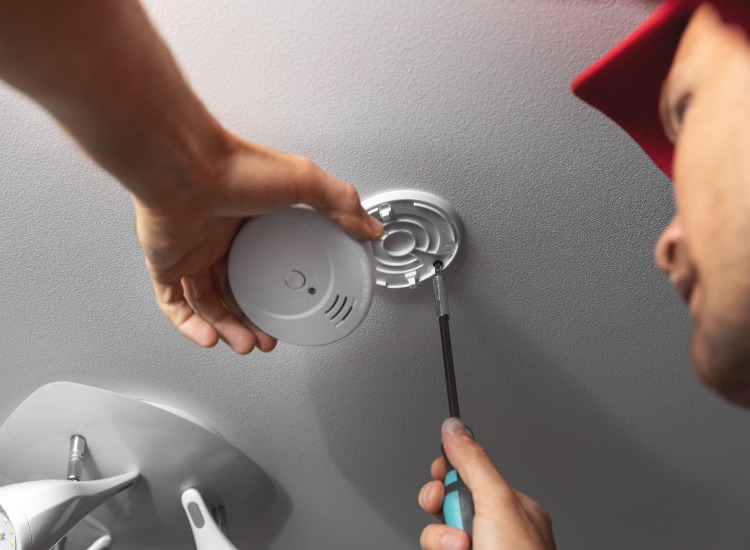
To test a battery powered smoke alarm, find the test button, press and hold it. That’s basically all there is to it! Alert everyone in the house that you are going to do this, because the sound should be loud, high-pitched, continuous, and strong. If it’s not consistent, or there is no sound at all, the battery should be replaced. If you replace the battery and the problem remains, it may be time to replace the smoke detector. With a hardwired unit, press and hold the test button; with interconnected alarms, all the alarms should sound. Check the backup battery, too, and if there seems to be a problem that isn’t fixed by replacing the battery, call an electrician. Note: wired smoke detectors have sensors and microprocessors that can be compromised by dust. To keep dust from weakening the sensitivity of your smoke detectors, vacuum them or blow compressed air into them, to clean away the dust.
Is Smoke Alarm Battery Replacement the Solution? Signs It’s Time for Detector Replacement
If your smoke alarm starts chirping, it may just need a new battery. On the other hand, smoke detectors do not last forever, and replacing the battery may not be enough. Smoke detectors typically last about 10 years; carbon monoxide detectors last six or seven. Beyond checking the manufacture date to make sure it’s not past its prime, you can tell if our smoke alarm needs replacing if it chirps once every 30 to 60 seconds, or if it fails a test — if holding down the button doesn’t elicit a loud alarm from your soke detector, it has passed its expiration date. Additionally, if your smoke detector survives a fire or is exposed to heavy smoke, it should be replaced. For carbon monoxide detectors, there is typically a test button, and batteries should be replaced at least every six months. Be aware that the test button determines the battery power, not the efficacy of the carbon monoxide detection. To ensure that the detector is working properly, a CO test is necessary.
Hardwired Vs Battery Powered Detectors
Battery powered detectors are convenient and easy to install, but in terms of reliability, hardwired detectors are a better option. When your smoke detector is hardwired, it’s more likely to be functional and ready to protect you in the event of a fire, because it is powered by the home’s electrical system, augmented by a backup battery. However, while anyone can install a battery powered detector, an electrician is necessary for a hardwired system. Since 1996, to remain in compliance with building codes, hardwired, interconnected smoke detectors with battery backup are required for all new construction homes in Iowa.
FAQs
How Long Do Smoke Detectors Last?
- Smoke detectors typically have a lifespan of about 10 years, while carbon monoxide detectors tend to last about six or seven years.
Where Should CO Detectors Be Installed?
- According to the EPA, carbon monoxide detectors should be installed on every floor of a house. If there is only one detector in the house, it should be placed near the sleeping areas.
Can I Replace Detectors Myself?
- Battery powered detectors are easy to replace on your own, but hardwired detectors require the expertise of an electrician.
Coffin Electric Will Test Your Detectors as Part of Your Home Fire Safety Inspection
When you need professional electrical services in the Des Moines area, trust the experienced, reliable team of licensed electricians at Coffin Electric. Since 1920, our local, family-owned business has been providing comprehensive electrical services to our community, and we work hard to exceed our customers’ expectations. Motivated and dedicated, we have the knowledge and technical skills necessary to provide quality service on every job, from upgrading electrical panels to installing generators and lighting fixtures to keeping the wiring in your home safe and up to date. We’ll always give you our full attention, behave with integrity, and stand behind our work. For all your home’s electrical needs, contact us and we’ll get the job done right.
- Coffin Electric0
- Electric Vehicles1
- Electrical Inspection3
- Electrical Installation3
- Electrical Maintenance2
- Electrical Panel1
- Electrical Rewiring1
- Electrical System8
- Electrical Technologies1
- Electrical Tips15
- Electrical Upgrade2
- Electrical Wiring1
- Electrical Work2
- Energy-Saving Tips3
- Heater Safety1
- Home Generators2
- Home Maintenance6
- IoT Devices1
- Lighting Ideas4
- Pool Lights1
- Surge Protection1